MKI frogeye
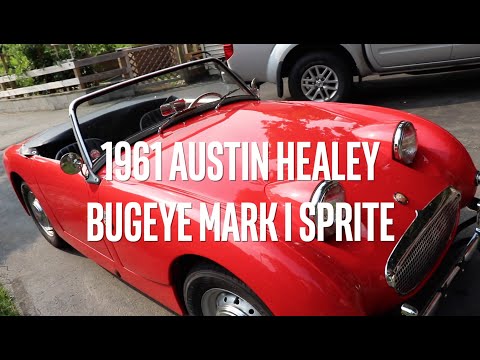
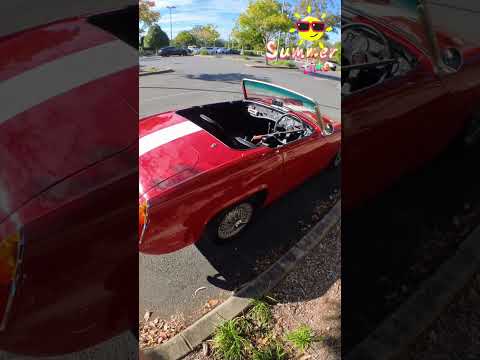
The Austin-Healey Sprites SPRITE Mark I – The Frogeye/Bugeye Produced in the United Kingdom from 1958 to 1971. The Sprite was announced to the press in Monte Carlo by the British Motor Corporation on 20 May 1958, just before that year's Monaco Grand Prix. It was intended to be a low-cost model that "a chap could keep in his bike shed", yet be the successor to the sporting versions of the pre-war Austin Seven. The Sprite was designed by the Donald Healey Motor Company, with production being undertaken at the MG factory at Abingdon. It first went on sale at a price of £669, using a tuned version of the Austin A-Series engine and as many other components from existing cars as possible to keep costs down. When the Mk. II Sprite (see separate Album to follow), was later introduced in 1961 it was joined by a badge-engineered MG version, the Midget, reviving a model name used by MG from the late 1920s through to the mid 1950s. Enthusiasts often refer to these later Sprites and Midgets collectively as "Spridgets." The MG-badged version of the car continued in production for several years after the Austin-Healey brand ceased to exist. SPRITE Mark I – The Frogeye, the Bugeye Affectionately known as the "frogeye" in the UK and the "bugeye" in the US, because of the aspect of its headlights were prominently mounted on top of the bonnet, inboard of the front wings. The body was styled by Gerry Coker, with subsequent alterations by Les Ireland following Coker's emigration to the US in 1957. The car's distinctive frontal styling bore a strong resemblance to the defunct American 1951 Crosley Super Sport. 48,987 "frogeye" Sprites were made. The 43 bhp, 948 cc OHV engine (coded 9CC) was derived from the Austin A35 and Morris Minor 1000 models, also BMC products, but upgraded with twin 1 1⁄8 inch SU carburettors. The rack and pinion steering was derived from the Morris Minor 1000 and the front suspension from the Austin A35. The front suspension was a coil spring and wishbone arrangement, with the arm of the Armstrong lever shock absorber serving as the top suspension link. The rear axle was both located and sprung by quarter-elliptic leaf springs, again with lever-arm shock absorbers and top links. There were no exterior door handles; the driver and passenger were required to reach inside to open the door. There was also no boot lid, owing to the need to retain as much structural integrity as possible, and access to the spare wheel and luggage compartment was achieved by tilting the seat-backs forward and reaching under the rear deck, a process likened to potholing by many owners, but which resulted in a large space available to store soft baggage. Engine 948 cc (0.9 L) A-Series 14 43HP at 5200 RPM Wheelbase: 2,032 mm (80 in) Length: 3480 mm (137 in Width 1346 mm (52.99 in) Height 1200 mm (47.24 in) With hood up
Know someone who'd love this clip?
Share it with friends and fellow fans.